
Mutual aid calendar fundraiser: monthly rhythm, shared labor, and organizer sustainability
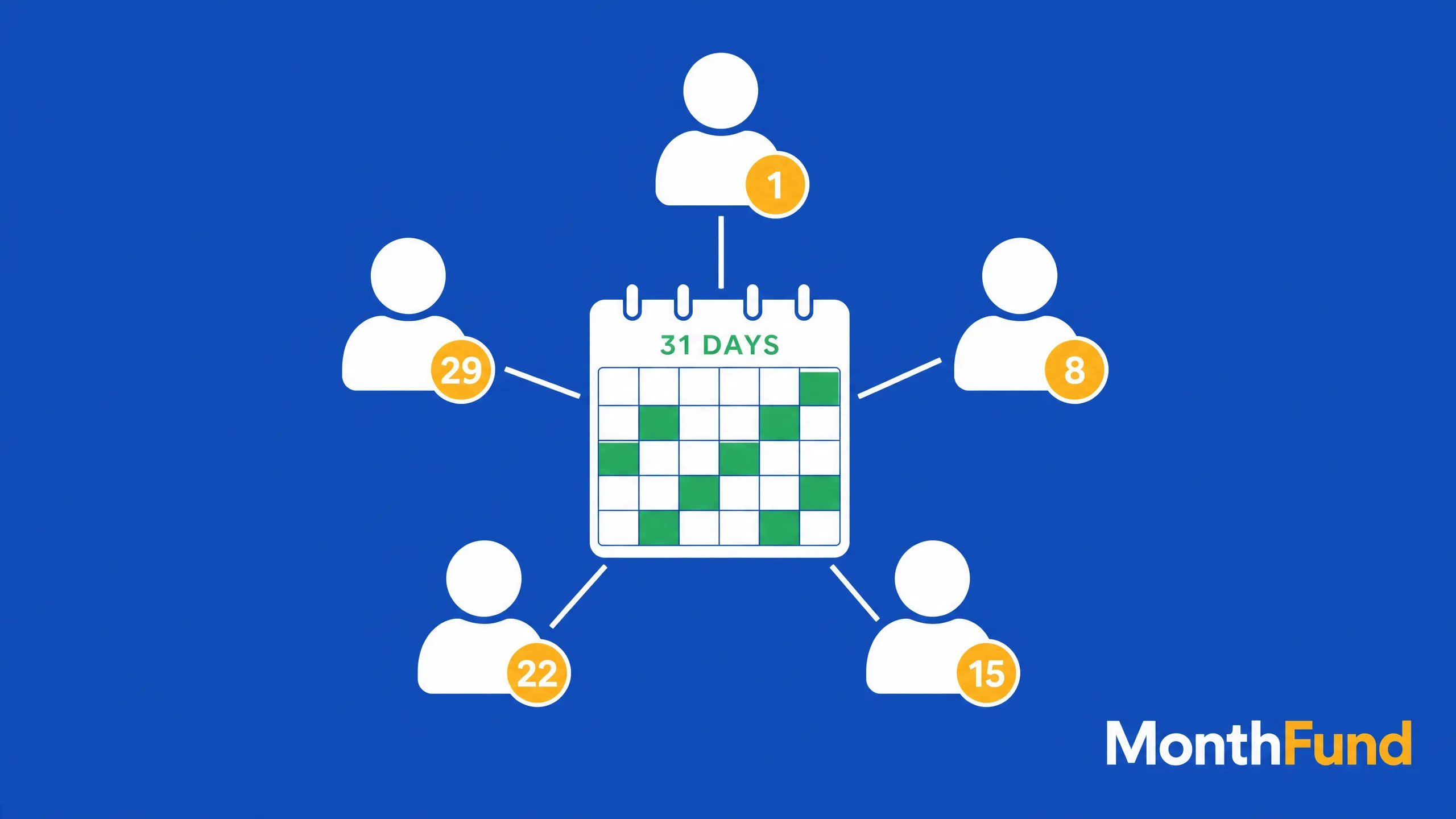
Mutual aid is not only a feeling of solidarity. It is logistics: requests, cash movement, transparency, and people doing the work. A calendar fundraiser gives ongoing networks a month-shaped rhythm: named days, many peer fundraisers, public progress, and a format you can run again without rebuilding the plan from scratch.
“Mutual aid requires sustainable structure, not just heroism. A calendar fundraiser distributes labor across many 'day owners,' preventing core burnout while providing a repeatable monthly rhythm and a transparent public grid.”
Pods, neighborhood funds, and volunteer-led networks often start with urgency: someone needs rent, supplies run low, or a crisis spikes attention. That urgency is real. So is the quieter problem that follows: the same small circle ends up fielding every request, sending every reminder, and apologizing when the pool runs dry. Software cannot replace relationships. It can give your community a repeatable shape so more people carry visible pieces of the work, and so organizers spend less energy inventing a new fundraiser every cycle.
MonthFund is calendar fundraising software: organizers launch a month, recruit participants as peer fundraisers, each fundraiser shares a day grid, donors claim days and give, and progress stays public. This article is written for mutual aid organizers who want monthly mutual aid fundraising that complements rapid responses, not as a verdict on how your community should care for itself.
If the format is new to your steering group, read how calendar fundraisers fit with galas, catalog programs, and other fundraising first, then return here for sustainability and rhythm.
The burnout pattern mutual aid shares
Most mutual aid groups describe the same curve: early energy, visible wins, then thin capacity. Requests do not arrive on a polite schedule. Money and time fluctuate. Without structure, outreach collapses to a few people who already said yes too many times. Burnout is not a personal failure; it is what happens when structure, boundaries, and distributed roles are missing.
A calendar fundraiser does not erase hard tradeoffs. It does address one specific failure mode: concentrated emotional and logistical labor in a tiny core who hold the whole ask in their heads. When each recruited fundraiser owns a visible slice of the month, the group can see where help still needs to land instead of guessing who is quietly drowning.
Sustainability, in practice, means more people knowing what "done" looks like this month, not one hero working harder.
Sprint, rhythm, or both
Some moments call for a sprint: fast launch, sharp deadline, all hands on a short window. Other moments call for a rhythm: predictable beats your network can plan around, even when headlines cool. Many real groups need both: an emergency push when the need spikes, and a calmer recurring lane that keeps a baseline alive between spikes.
For sprint framing and compressed timelines, compare notes with grassroots calendar fundraiser: fast coordination. This post focuses on what comes after the spike: how to keep mutual aid fundraising structured when urgency alone is not enough to hold the group together.
| Pattern | When it helps | How a month grid helps |
|---|---|---|
| Crisis or issue sprint | Attention is high; you need structure fast. | A bounded month turns goodwill into named days and owners before the moment fades. |
| Monthly rhythm | You need predictable community giving between pop-ups. | Same calendar mechanics each cycle: less re-explaining, clearer comms. |
| Hybrid | Your network does both rapid response and ongoing care. | Use the sprint when you must; return to the month when you want steady distributed asks. |
What we mean by a calendar fundraiser
Organizers launch a month, fundraisers each share a calendar, donors claim days, and progress stays visible until the month fills.
Day amounts follow dates (for example, the 14th is a $14 ask at face value). That pattern is easy to explain in a group chat, at a meeting, or in a flyer: claim a day, give at least that amount, optional fee cover, progress visible on the grid. For why public calendars change accountability compared with a single thermometer, see why the calendar grid matters for accountability.
Product walkthroughs and donor experience live on How it works. Donor-facing language is collected in the donor guide.
How the grid spreads labor
Mutual aid depends on many hands. The calendar model makes that literal: each fundraiser maintains their own month of days and reaches their own network. Organizers still coordinate, but they are not the only public face of every gift. Participants can point to their open days instead of broadcasting a vague "please donate" thread that nobody owns.
That distribution matters for sustainability. People step back and return when life shifts. If the structure is clear, someone else can pick up an open day or join the next month without rebuilding social trust from zero. The grid is a shared picture of work, not a private spreadsheet only the treasurer understands.
Transparency as practice
Transparency is not only an aesthetic preference for mutual aid; it is how communities defend trust. A public month shows which days are open, which are claimed, and how the group is moving. That visibility does not replace clear statements about where money goes, who approves disbursements, or how you document support. It gives members a readable signal that the campaign is alive and shared.
Pair the grid with plain-language finance habits your group already believes in: named purposes (rent, supplies, transit, emergency cash), published decisions when appropriate, and honest notes when a month ends partial. MonthFund shows progress; your policies show integrity.
Low floors, wide participation
Not everyone can give $100 on impulse. Early days in the month are small-dollar by design: a few dollars still marks a day and trains the habit of participation. That accessibility matches how many mutual aid networks think about solidarity: many small commitments that add up, rather than a single gate kept by large gifts only.
If your community includes people with very limited cash capacity, name that openly. Some members will contribute later in the month when amounts are higher; others will give time, food, or visibility instead. The calendar handles the financial lane; it does not pretend to be the whole ecosystem of care.
How it sits in your toolkit
MonthFund is one tool alongside everything else you might run: mutual aid Venmo chains, supply rooms, in-person events, grants, fiscal sponsors, and informal cash apps. Adding a calendar month does not invalidate those channels. It gives people who want to help remotely a concrete task with a clear scoreboard.
If leadership worries about "too many asks," sequence the calendar after you explain the purpose for this month (emergency fund, rent pool, supply restock) and alongside non-monetary roles so giving is not the only way to show up. The pillar article on fundraiser formats in the larger toolkit stays the canonical contrast with galas, catalogs, and open donate pages.
Repeat months without heroics
Rhythm means your community can learn the script. Month one teaches what claiming a day feels like. Month two recruits faster because the explanation is shorter. Month three is where mutual aid monthly fundraising stops feeling like a bespoke invention and starts feeling like a habit: "First week of the month we open the calendar; third week we remind; last week we close and report."
You do not owe anyone twelve perfect months. You do owe your core organizers fewer one-off scrambles. Repeating the same structure reduces decision fatigue: the shape is stable even when the story changes (new priority, new name, new goal context).
Planning math and honest expectations
A full 31-day path at face values sums to $496. That sum is a planning anchor for one complete calendar at the day amounts, not a promise about your community or a ceiling on generosity. Real campaigns often land above that when donors give more than the day amount; some months finish partial when recruitment or timing lags. The point is sharable arithmetic before you commit funds you cannot cover.
Walk scenarios with your finance circle using the $496 number and how to model fill rates so expectations align before you announce goals publicly.
Recruitment with care
Distributed labor still requires intentional invites. Ask people directly who have networks and bandwidth, not only the usual three volunteers. Share sample language for texting friends and posting in neighborhood groups. Celebrate filled days in public channels so participation is visible and appreciated.
For a cohort playbook, use how to recruit 25 participants for your first calendar fundraiser and adapt it to mutual aid norms: consent, privacy, and realistic asks for people who may be trauma-fatigued or cash-strapped themselves.
Governance, boundaries, and non-financial support
MonthFund is software for coordinating gifts. It does not choose your fiscal sponsor, write your disbursement policy, or mediate conflict in your pod. If you are unincorporated, payment processing rules still apply; your treasurer or fiscal partner should confirm what is required. If someone needs housing or food, money is one tool among many; the calendar funds cash pathways you define, not every human need automatically.
Set boundaries on organizer availability ("we answer messages Tuesday and Thursday"), rotate roles, and protect people who say no. Sustainability includes rest, not only revenue.
When a calendar month should not lead
Do not lead with a calendar sprint if your group is mid-crisis internally, if trust is broken and public scoreboards would feel performative, or if you cannot roster a first wave of fundraisers who will actually message their networks. It is also the wrong lead if legal or banking setup is still unresolved and you cannot tell people plainly where money flows. Wait until the basics are credible; the tool will still be there.
Next steps
Read how MonthFund frames mutual aid on MonthFund for mutual aid groups, then walk the launch checklist before you announce. Open a free account when you are ready: sign up free. If product fit questions remain, use contact for software questions, not for legal or tax advice specific to your network.
Common questions
Do we need to be a 501(c)(3) to run a month? No. Many informal networks use MonthFund; payment processing requirements depend on your setup and processor. Confirm details with your fiscal partner or banking path.
Can we run one month for emergency cash and another later for supplies? Yes. You can change campaign framing as priorities shift. The mechanics stay familiar so your community learns the habit.
What if we only fill part of the month? Partial months still raise real money. Report honestly, thank participants, and model the next month with what you learned about recruitment and timing.
How is this different from a general donation link? Open links rely on one-off gifts and vague peer sharing. A calendar gives each day a face value and owner, which improves accountability and makes progress legible. See why the calendar is the point for the full argument.
For the full model overview, the pick a date fundraiser guide explains the mechanics and math in plain terms.
How much can your community raise?
Use our interactive calculator to model your potential outcomes based on participant count and fill rate.
Built for your community
Whether it's mutual aid, school support, or local relief, we have the tools to help you scale.
Common Questions
How does this help with burnout?
By making every day an 'owned' task, it prevents a small core of organizers from having to send every reminder and track every gift manually.
Is it okay to only fill part of the month?
Yes! In mutual aid, every filled day is a win. A partial month still raises real cash and builds the habit of communal support.
How do we maintain transparency?
The public grid shows exactly which days are filled, providing immediate, visual transparency to your entire network.
Can we use this for emergency rent relief?
Yes. Many groups run a 'rent sprint' using the calendar to quickly mobilize funds for specific neighbor needs.
How do we scale our impact?
Scaling happens by adding more participants. You can model your potential revenue using the $496 base number.
Calendar fundraisers for your group type
Keep Exploring
View all posts →December Giving Calendar for Churches: Advent Plan
A December fundraising plan for churches that invites steady participation while keeping the mission, not pressure, at the center.
Youth sports travel fundraising: a season budget and calendar plan
Start with the trip budget, subtract committed funds, then set a fundraising target for the gap. Use conservative fill-rate scenarios to decide whether one calendar month is enough.
How calendar fundraisers fit with galas, catalogs, and other fundraising (toolkit, not replacement)
MonthFund is one powerful layer in a larger toolkit. See how a calendar month complements product sales, ticketed events, and open donate pages, with patterns you can use around a 5K or gala.