
Fall calendar fundraiser playbook: August to October timing and back-to-school recruitment
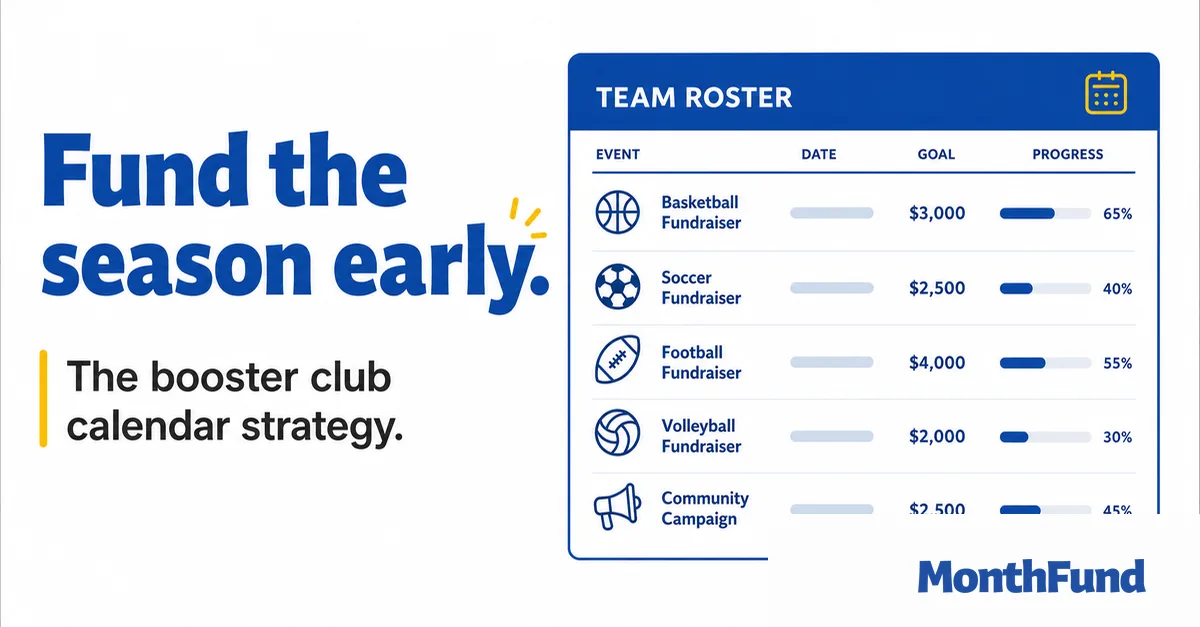
Spring gets the fundraising attention, but fall holds the better cards: a fresh roster, one night when every parent is in the building, and budgets that are set in September instead of spent. The catch is a hard deadline. By mid-November the holidays take over every inbox. Here is how to time an August, September, or October calendar fundraiser and close it before the collision.
“Recruit at back-to-school night or the first team meeting, when attendance peaks for the whole year. Launch mid-September for schools and PTAs, August for fall sports whose fees are due early, and use October as the last clean window. Whatever you pick, close the month before Thanksgiving week. A calendar that runs into late November competes with every holiday appeal in the country and loses.”
A calendar fundraiser works in any month, but fall rewards a specific kind of organizer: the one who recruits while everyone is still showing up. Organizers launch a month, fundraisers each share a calendar, donors claim days, and progress stays visible until the month fills.
If you ran a spring month, most of that playbook carries over; the spring timing guide covers the March and April version. This one is about what fall changes: the recruitment moment, the deadline, and the competition you are trying to finish ahead of. If you are still comparing formats, start with how calendar fundraisers fit beside catalogs, events, and open donate pages.
Why fall is the strongest recruiting window
Participation, not generosity, is what decides a calendar month. One full grid is $496; the question is how many people carry one. And fall is when your pool of carriers is largest. New families want a way in. Returning volunteers have not burned out yet. Team rosters are finalized and every name on them is reachable. By February, a third of those people have stopped opening the newsletter.
Fall fundraising is a roster problem, and fall is the one season when the roster assembles itself in front of you.
The costs are real too. Field trips get booked in the fall. Uniforms and equipment are bought before the first game, not after. Classroom budgets run out by October, which is why teachers increasingly run their own classroom months in this window.
August September or October
August belongs to fall sports and early-start programs. Fees, tournament deposits, and travel blocks are due before or at the season opener, so an August month funds the season instead of reimbursing it. Boosters can recruit at the first practice, when every family attends. The booster club calendar strategy covers how the month sits beside concessions and game-night revenue.
September is the PTA and school window, with one caveat: not the first two weeks. Launching during the back-to-school scramble buries your campaign under permission slips. Recruit during the scramble, launch after it. A month that opens around September 15, or on October 1 for a clean grid, catches families in routine with their giving budget untouched.
October is the last clean window of the calendar year, and honestly an underrated one. A month that runs October 1 to 31 finishes with November untouched, which matters more than most organizers realize (more on that below). Model outcomes for any of these windows with the $496 framework and realistic fill rates before you promise a number to your board.
Recruit at back-to-school night
This is the tactical heart of the fall playbook. Back-to-school night, meet-the-teacher night, the first team meeting: these are the highest-attendance gatherings of the entire year, and most groups waste them on a flyer.
Do it in person instead. One organizer, a signup sheet, and a pitch that fits in a sentence: each participant carries a month calendar, supporters claim days and give that amount, nobody sells anything. Collect names and phone numbers on the spot. A parent who says yes in the gym in September becomes the cohort that makes October work; the same parent, emailed in October, is a maybe. The recruitment playbook covers the follow-through: personal asks first, names on days, then widen the circle.
The two-week head start
Messaging that names the season
Skip the pumpkins. Fall themes are fine as decoration, but the message that fills days names a cost, not a season: the field trip bus, the new mats, the classroom library. "Help us reach our goal" asks for nothing in particular; "Day 14 covers a student's field trip seat" gives a donor a specific box to close.
- School newsletters. Lead with the public calendar link, then point new families to how schools explain the model to parents.
- Participant scripts. Keep the ask bounded. "I claimed Day 18 for the team, can you take a day too?" outperforms a paragraph of context. Ready-to-send versions live in the message template library.
Avoid the November collision
Here is the deadline that shapes everything else. From mid-November through December, your donors' inboxes fill with Giving Tuesday appeals, holiday drives, and year-end asks from every nonprofit they have ever given to. A calendar month still open in that stretch is competing against the loudest fundraising season of the year with a mid-campaign message.
So work backward. A month that closes by October 31 never meets that noise. If you slip to a November 1 start, treat the grid's final week like a sprint and close hard before Thanksgiving; the week-by-week nudge plan and the 3-Day Rule are how you keep a fall month from coasting into the holidays half full.
Your fall launch sequence
The whole playbook in five lines. Recruit in person during the first two weeks of school. Confirm your cohort and seed grids by mid-September. Launch on a clean date, September 15 or October 1. Nudge weekly, with a mid-month open-days post. Close by Halloween and publish the filled grid, because this year's screenshot is next year's recruitment poster.
When you are ready, start a free calendar fundraiser and walk the launch checklist before the first newsletter goes out.
How much can your community raise?
Use our interactive calculator to model your potential outcomes based on participant count and fill rate.
Ready to launch?
Set up your first fundraiser in under 10 minutes. No credit card required.
Common Questions
When should a PTA run a fall fundraiser?
Mid-September through October is the strongest window. The first two weeks of school are too chaotic for a launch, but they are perfect for recruitment: back-to-school night puts nearly every family in one room. Recruit there, then open the calendar once routines settle, around the third week of September.
Is October too late to start a school fundraiser?
No. October is the last clean window of the calendar year, and a 31-day month that starts October 1 finishes before the holiday season starts pulling attention. What is too late is November. Giving Tuesday, holiday drives, and family travel bury a mid-November campaign.
How do you recruit fundraiser participants at back-to-school night?
Bring a signup sheet and a one-sentence pitch: each participant carries a month calendar where supporters claim days, and nobody sells anything. Ask for names and phone numbers on the spot rather than promising a follow-up email. In-person yes rates at back-to-school night beat email response rates for the rest of the year, so treat that room as your whole recruitment budget.
Is fall or spring better for a calendar fundraiser?
Both work, and many groups run one of each. Fall has better recruitment (everyone shows up at the start of the year) and fresher volunteers. Spring has clearer deadlines, since trip and program costs land at year end. If you can only run one, fall usually wins on participation, which is the number that drives the total.
Can a sports team use the fall window?
Yes, and fall teams should move earliest. Football, soccer, and cheer squads face fees and travel costs due in August and September, so an August calendar that funds the season before it starts beats an October one that chases costs already spent. Winter sports fit the October window well.
Keep Exploring
View all posts →Can Schools Use Stripe for Fundraising? Start With the District
MonthFund cannot currently mail fundraiser checks. Learn how a school or district may approve Stripe, who should own the account, what the business office needs, and which real schools already use Stripe for selected payments.
School fundraiser approval guide: budget, payments, and privacy
A principal or PTA board needs more than a catchy idea. This approval packet covers purpose, budget gap, payment flow, privacy, parent communications, and closeout before the campaign reaches families.
How calendar fundraisers fit with galas, catalogs, and other fundraising (toolkit, not replacement)
MonthFund is one powerful layer in a larger toolkit. See how a calendar month complements product sales, ticketed events, and open donate pages, with patterns you can use around a 5K or gala.