
Spring calendar fundraiser playbook: March and April timing, themes, and recruitment
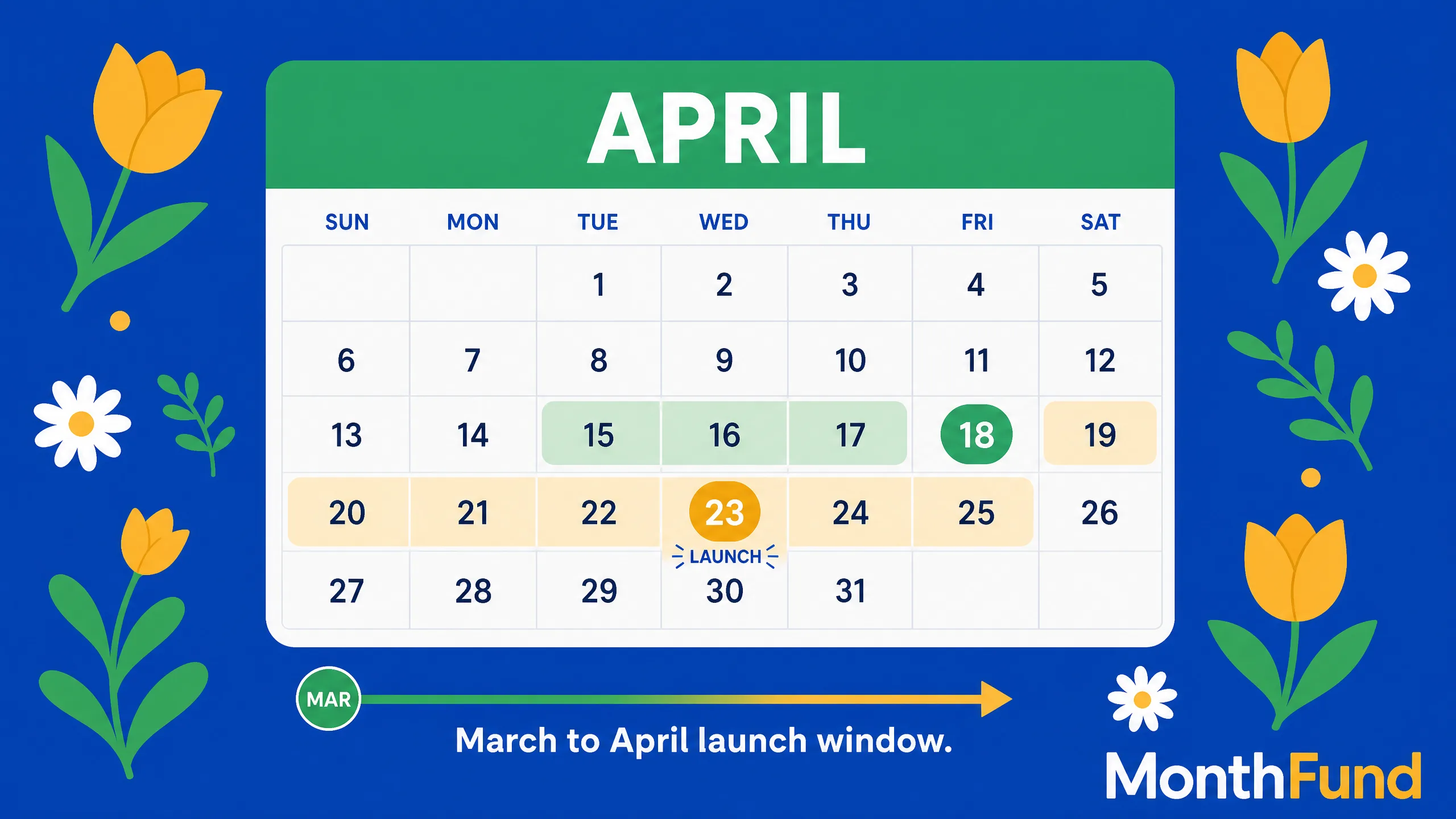
Spring is when trip deposits, uniforms, and field costs collide with volunteer fatigue. A well-timed calendar fundraiser gives you a full month of visible motion, with or without a product catalog in the same year.
“Spring is prime time for travel and end-of-year costs. Align your calendar with March or April windows to catch momentum after winter breaks, using the visible grid to close budget gaps quickly before school lets out.”
A calendar fundraiser works in any month, but spring rewards organizers who align the campaign with how families already think: finish strong, pay for what is next, and avoid another pile of merchandise in the foyer. Organizers launch a month, fundraisers each share a calendar, donors claim days, and progress stays visible until the month fills.
If you are comparing formats, start with how calendar fundraisers fit with catalog sales, events, and open-ended pages. This guide is about seasonal execution for March and April.
Why spring is a strong window for a calendar fundraiser
After winter drives, many groups pause just when costs accelerate. Travel, equipment, end-of-year programs, and graduation-adjacent expenses all land in the same few weeks. A static donate link can sit quietly in a newsletter; a day grid gives everyone a specific box to close.
Spring fundraising is less about urgency banners and more about shared schedule pressure. The calendar makes that schedule legible.
Pick your launch window March April or after spring break
March fits band schedules, club sports, and PTAs that want one more structured push before budgets lock. You catch people while they are still in routine, before late-spring chaos.
April works when you need results after spring break announcements: tournament fees posted, invoices due, seniors weighing final trips. Launch the first full week back so participants return to a campaign already in motion.
Short months are fine. February and April still support a full calendar fundraiser; model outcomes with the $496 framework and realistic fill rates so expectations stay honest before you recruit.
Themes and messaging that pair with spring programs
You do not need a gimmick. The theme is already in your calendar: one day, one ask, one amount. In copy, name the program you are funding (travel, scholarships, uniforms) and the month you are filling. Avoid vague “help us reach our goal” language; the grid is the goal rendered as thirty or thirty-one boxes.
- School newsletters: lead with the public page, then link to how schools describe the model to parents.
- Participant scripts: keep the ask bounded. "I claimed Day 18 for the program, can you do $18?" lands faster than a long setup paragraph.
Build your recruitment bench before you open the month
Spring breaks split attention. Line up your first wave of participants before you send the blast so the page does not launch empty. The same playbook as recruiting your first 25 participants applies: personal asks, names on days, then widen the circle.
If you are refreshing a winter roster, confirm who can stay for the new month and who needs to hand a day to someone else. Continuity matters less than clarity: every day needs an owner who will message their own network.
Your first email and internal links
One email should carry three links: the public campaign page, the organizer’s short explanation of how days work, and your signup or onboarding path for new participants. Close with a single action: claim a day or forward to someone who will.
When the month ends, screenshot or export the filled grid for your update channel. Visible completion is its own recruitment asset for the next season.
For a full overview of the pick a date model, the pick a date fundraiser guide covers the mechanics and math end to end.
How much can your community raise?
Use our interactive calculator to model your potential outcomes based on participant count and fill rate.
Ready to launch?
Set up your first fundraiser in under 10 minutes. No credit card required.
Common Questions
When is the best time to launch in the spring?
The first full week after spring break is ideal. People are back in their routines and focused on the final programs of the year.
What if our spring break is in the middle of the month?
You can still run it! Just ensure your recruitment happens *before* the break so the calendar is already in motion when people go offline.
Can we use this for youth sports travel?
Spring is the peak season for travel sports deposits. Our youth sports guide covers how to time your month for team travel.
How many participants do we need?
We recommend starting with a goal of 25 participants to reach a $10,000 outcome. Learn more about the math here.
Is there a free trial?
You can sign up and start building your campaign for free today.
Keep Exploring
View all posts →Printable Calendar Fundraiser With a QR Code
Use a printable calendar and QR code to move supporters from a hallway bulletin board to a live, shareable online giving path.
Digital Calendar Fundraiser Setup: Personal Links
Set up a digital calendar fundraiser with personal supporter links, open-day claims, shared progress, and clear organizer roles.
How calendar fundraisers fit with galas, catalogs, and other fundraising (toolkit, not replacement)
MonthFund is one powerful layer in a larger toolkit. See how a calendar month complements product sales, ticketed events, and open donate pages, with patterns you can use around a 5K or gala.