
The buy-a-block fundraiser: funding physical projects square by square
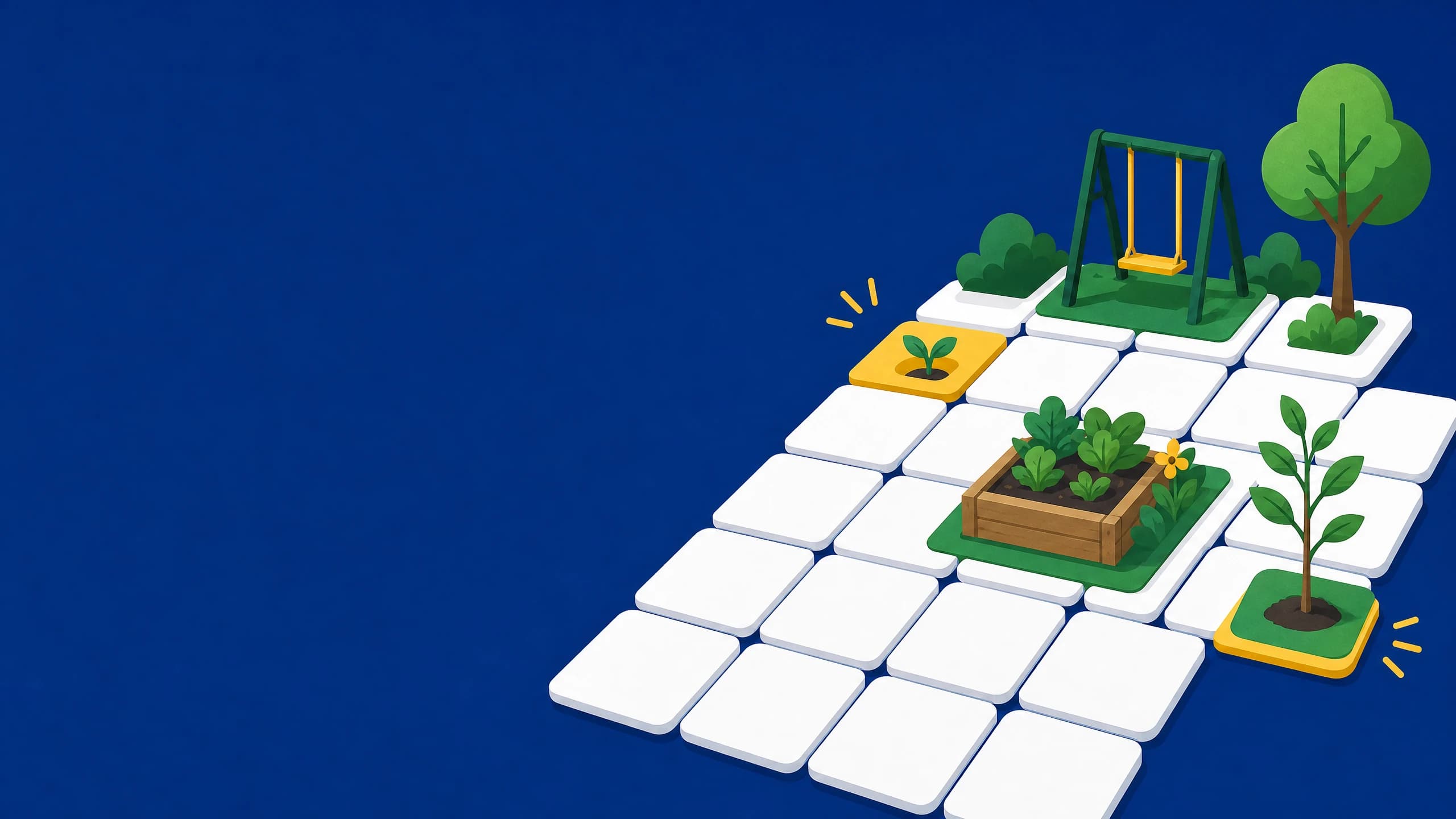
When a community sets out to build something physical—a playground, a garden, a mural—the fundraising often feels disconnected from the dirt and the paint. We ask for abstract donations to fund a concrete reality. The buy-a-block model changes this, grounding the math of the campaign in the very squares of the project we are trying to build.
“A buy-a-block fundraiser is mechanically identical to a calendar fundraiser but is framed for physical community projects. Instead of claiming days of a month, supporters sponsor 'blocks' or 'squares' of a project, providing a tangible connection between their donation and the physical outcome.”
There is a fundamental disconnect in how we often fund physical projects in our neighborhoods. We stand in an empty lot, envisioning a playground or a community garden, and then we send out letters asking for general contributions. The request is abstract; the goal is concrete.
People want to know exactly what their money is building. They want to point to a swing set or a raised bed and say, “I helped put that there.” The buy-a-block fundraiser provides that direct, tangible connection. It takes the elegant math of the calendar fundraiser and maps it onto the physical space we are trying to transform.
Grounding the math in reality
The brilliance of the pick a date fundraiser is its structure. It provides a bounded grid of thirty-one days, giving everyone a clear, manageable piece of the goal. The buy-a-block model takes that exact same structure and simply changes the labels.
Instead of days on a calendar, the grid represents blocks of the project. If you are building a community garden, the grid might represent thirty-one raised beds or thirty-one sections of fencing. If you are painting a mural, the grid represents thirty-one squares of the wall.
The framing shifts from time to space. It grounds the fundraising in the dirt, the wood, and the paint of the project itself.
Choose a project people can see
The model works best when the project is narrow enough to picture. “Improve the park” is worthy, but it asks the donor to imagine too much. “Build four raised garden beds beside the playground” gives the community something concrete to hold in mind. The project does not need to be small. It simply needs a first visible chapter.
Before you make the grid, write three lines: what will change, who will use it, and what the first completed version looks like. A neighborhood group can use that language in every post, sponsor request, and thank-you. The repetition is useful. It makes the project easier to retell.
Name the first finished thing
The mechanics of the grid
The mechanics remain delightfully simple. You present a public grid, numbered from one to thirty-one (or whatever number fits your scope). A supporter selects a block. The number on the block is the amount they give. Block 15 requires a $15 donation. Block 30 requires a $30 donation.
As donations arrive, the grid fills. The community watches as the abstract financial goal slowly transforms into a fully funded reality. It is a visual representation of collective effort. No single person is asked to fund the entire garden; instead, thirty-one people each claim a small square of the earth.
Three ready-to-run project adaptations
Community garden grid
Draw thirty-one beds, tools, seedlings, or sections of fencing. Pair each square with a short line about the garden's purpose, such as fresh produce, a school gardening program, or a shared gathering space. Post a photo of the empty site on launch day and a photo of the first planting when the grid begins to fill.
Playground or park grid
Use the grid to fund the first practical layer of a larger project. Supporters can claim blocks representing a bench, tree, safety surface, picnic table, or repair supply. Do not imply a specific donation buys a regulated piece of equipment unless that accounting is true. The value is the shared project story, not artificial earmarking.
Mural or public-art grid
Break the design into color families or visible sections. A local artist can share a sketch, explain the community theme, and reveal progress as blocks fill. This is an especially natural place to invite a local business to sponsor a premium block and be acknowledged in the project update.
These versions all preserve the same simple motion: organizers define a visible goal, supporters claim a piece, and the public can see the shared work move forward. If your group needs a broader menu of options before selecting a project, start with the community organization fundraising ideas hub.
A tangible connection to the work
This model thrives because it respects the donor's desire for impact. When someone claims Block 20, they are not just giving twenty dollars to an organization; they are buying the soil for that specific section of the garden.
This tangible connection encourages participation. It is easier to ask a neighbor to sponsor a square of the new playground than to ask them for a general donation. The request is specific, the cost is clear, and the outcome is visible.
Scaling the squares
Just as a calendar fundraiser can scale by giving each participant their own month, a buy-a-block campaign can scale by dividing the project into sections.
If the neighborhood association needs to raise $5,000 for the playground, one grid of thirty-one blocks (which yields $496) is not enough. But if ten volunteers each take ownership of their own grid—perhaps each representing a different piece of equipment—the math suddenly works. Ten fully claimed grids raise $4,960.
Close the loop after the grid fills
The campaign is not finished when the last block is claimed. Send a thank-you within a few days, including one photo or sketch that shows the next step. When the work begins, share another update. When the first phase is complete, show the result and name the collective effort behind it. These updates make the next request easier because supporters can see what happened after they said yes.
For local business outreach, use the community project sponsor pitch template. It gives you a sponsor menu, a ready-to-edit letter, and a tracker for the follow-up work that is easy to forget in the rush to launch.
The buy-a-block model proves that we do not need to rely on exhaustion to build our communities. We need structure. We need clarity. We need a grid where everyone can claim their square and watch the project rise from the ground up.
How much can your community raise?
Use our interactive calculator to model your potential outcomes based on participant count and fill rate.
Tired of inventory?
Join hundreds of organizers who have switched to a logistics-free calendar model.
Common Questions
What is a buy-a-block fundraiser?
A buy-a-block fundraiser is a structured campaign where a physical project is divided into a grid of 'blocks' or 'squares.' Supporters claim a numbered block and donate that amount (e.g., Block 25 equals $25). It is the exact same math and mechanics as a calendar fundraiser, but framed for a tangible project.
How does a buy-a-block fundraiser differ from a calendar fundraiser?
Mechanically, there is no difference. Both use a numbered grid where the number dictates the donation amount. The difference is entirely in the framing. A calendar fundraiser uses days of a month, while a buy-a-block fundraiser uses squares of a physical space, like a community garden or a brick wall.
What types of projects work best for a buy-a-block campaign?
This model excels for physical, community-driven projects. Building a new playground, planting a community garden, painting a neighborhood mural, or renovating a local club space are perfect fits. The visual nature of the grid maps directly to the visual nature of the project.
Calendar fundraisers for your group type
Keep Exploring
View all posts →Calendar Fundraiser vs. GoFundMe: Why the Goal Meter Causes Donor Fatigue
GoFundMe is built for emergencies. A calendar fundraiser is built for structured, recurring organizational fundraising. Here is why the open-ended goal meter stalls, and why the 31-day grid works better for schools and teams.
Pick a Date Fundraiser vs. Fun Run: Which is Right for Your School?
Fun runs build community but require massive logistics. Pick a date fundraisers require almost zero logistics but lack the in-person event. Here is how to choose—or how to run both.
How calendar fundraisers fit with galas, catalogs, and other fundraising (toolkit, not replacement)
MonthFund is one powerful layer in a larger toolkit. See how a calendar month complements product sales, ticketed events, and open donate pages, with patterns you can use around a 5K or gala.