
10 Basketball Team Fundraising Ideas With Low Logistics
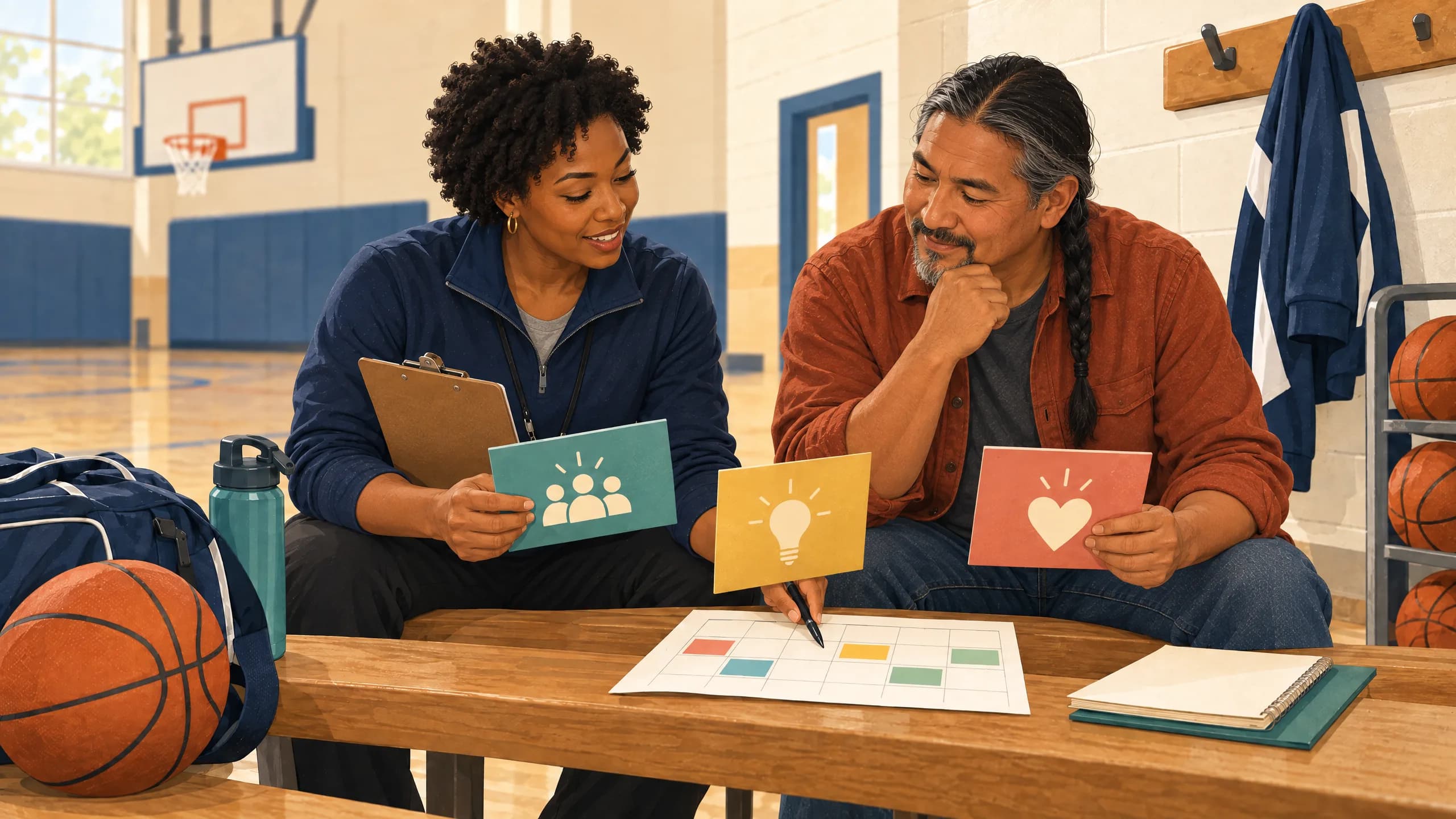
Basketball team fundraising ideas do not need another catalog, a weekend of sorting orders, or one parent carrying the plan. The lowest-logistics options use relationships a team already has: player households, former families, local businesses, and game-night supporters. Choose one specific season cost, make one clear ask, and give every family a practical way to help.
What “low logistics” should mean for a basketball team
Low logistics does not mean effortless. Someone still sets the goal, coordinates the message, and thanks supporters. It does mean avoiding inventory, paper order forms, cash envelopes, delivery nights, and payment chasing.
Write the need in one sentence before selecting an idea. “Help cover the remaining tournament entry fees” is more useful than “support the team.” Specificity helps families decide whom to ask and lets supporters see what their help is for.
10 low-logistics basketball team fundraising ideas
1. Run a pick-a-date calendar fundraiser
Each player household gets a concrete, shareable ask instead of a product to sell. Supporters choose an open date and give the matching amount: Day 8 is an $8 gift. On a MonthFund organization campaign, each community fundraiser has a personal calendar while the organizer follows the team campaign total.
A full 31-day calendar has a $496 face value when every day is claimed at its day number. That is planning math, not a promise. Review the sports team calendar fundraiser model before choosing a month.
2. Make one direct appeal for one visible need
Name the need, state the funding gap, and use one organization-approved way to contribute. “New practice balls” or “the December tournament gap” is easier to understand than a broad request. Then invite each family to send a short note to people who know their player.
3. Ask local businesses to sponsor one practical need
Offer a focused opportunity: tournament registration, warm-up equipment, or a team meal after an away game. A one-page overview should cover the team, purpose, requested contribution, and any acknowledgement your program can responsibly offer. Get approval before promising logos or announcements.
4. Hold a former-family and alumni giving week
Former players, graduating families, and alumni already understand the program. Send a personal update with three essentials: what the team is preparing for, what the gift supports, and where to give. Add a practice photo only if your school or club allows it, then send a prompt thank-you.
5. Use a restaurant giveback night as a community touchpoint
When a local restaurant has a giveback program, it can be a useful supplement. Confirm the terms, learn what supporters must say or show, and give families one clean graphic or text. Choose a natural date, such as a home opener or senior night, rather than creating another event to manage.
6. Add a QR code to an approved game-night announcement
A QR code gives relatives and fans a way to help in the moment. Use it in a program, table sign, or announcement only with school, league, and venue approval. Name the purpose and send people to an approved campaign or donation link. It supports personal outreach; it does not replace it.
7. Run a fixed-gift free-throw challenge at practice
Use a practice already on the calendar. Each player asks a few supporters for one fixed gift to back the challenge, then the team shares a brief recap and thank-you. Fixed gifts keep follow-up simple; per-shot pledges can create tracking and collection work that defeats the low-logistics goal.
8. Offer a short skills clinic when court time and staff already exist
A youth clinic can fit a varsity program or travel team with court time, coaches, and appropriate supervision already in place. Keep it narrow: one age range, one short session, straightforward registration, and a clear cap. If adult capacity is thin, choose a digital ask instead.
9. Make it a “one family, five personal asks” day
Pick one sharing day and ask each household to send a respectful, personal note to five people who genuinely know them. Provide the purpose, link, and a two-sentence template; families add their own voice. This works especially well beside a direct appeal or calendar campaign.
10. Send an optional supporter update during the season
Follow up with people who have already shown interest: a short update, a thank-you, and an optional link toward one remaining need. Share what happened after the first ask. The update keeps the team visible without turning every message into another hard sell.
Choose one idea by looking at the work, not the headline
| If your team has… | Start with… | Keep the scope small by… |
|---|---|---|
| Player households with distinct networks | A calendar fundraiser | Giving every household a personal link and message |
| One urgent, easily explained expense | A direct appeal | Naming the exact funding gap |
| Friendly local businesses | A practical sponsorship ask | Offering one approved acknowledgement |
| A home-game audience | A QR-code campaign link | Using it beside personal outreach |
| Existing gym time and adult coverage | A clinic or free-throw challenge | Using an existing court block |
The strongest choice fits work your team is already doing. A restaurant night can complement a calendar fundraiser; it should not turn a coach or parent lead into a full-time event manager.
A message families can adapt today
Hi [Name], [Player] is playing with [Team] this season, and we are raising funds for [specific purpose]. Would you consider helping with a gift of any size? You can learn more or contribute here: [link]. We appreciate you being part of [Player]’s basketball community.
Ask families to replace the brackets and add one honest sentence of their own. Personal detail matters more than polished marketing language.
A simple basketball fundraising launch checklist
- Confirm organizational approval and the right payment path.
- Name one purpose, one target, and one campaign owner.
- Choose a format that matches available parent hours.
- Give families a ready-to-share link and short message.
- Set a start date, a midpoint check-in, and a thank-you plan.
- Close the campaign cleanly before the schedule gets busy.
How MonthFund can distribute the ask across a roster
For teams that want a product-free, people-powered option, MonthFund gives the work a clear structure. An organizer launches an organization campaign and invites community fundraisers, often player households or booster members. Each person shares a personal online calendar. Donors claim open days and give the day amount or more; those personal calendars combine into the team campaign total.
It is not one shared grid every family has to coordinate. It is a team goal supported through many real relationships. Read the pick-a-date fundraiser guide for the format, or see how MonthFund works before selecting your launch window.
Practical next step: Choose one cost your basketball community can name in a sentence, then decide whether a personal-calendar campaign is the right way to distribute the ask. Visit MonthFund for sports teams to map the roles before inviting families.
How much can your community raise?
Use our interactive calculator to model your potential outcomes based on participant count and fill rate.
Ready to launch?
Set up your first fundraiser in under 10 minutes. No credit card required.
Common Questions
What are the easiest basketball team fundraising ideas?
The easiest options avoid inventory and use existing relationships: a specific direct appeal, a calendar fundraiser, a local business ask, a restaurant giveback night, or a small campaign shared by player households.
What basketball fundraiser requires no products to sell?
A direct digital appeal, a pick-a-date calendar fundraiser, a business sponsorship ask, or a fixed-gift free-throw challenge can work without catalogs, order forms, or product delivery.
How can a basketball team fundraise without pressuring players to sell?
Make adults and player households the fundraisers. Give them a clear purpose, an approved link, and a personal template to share with people who know the player or program. Participation should remain respectful and optional.
When should a basketball team start fundraising?
Start when costs are clear and before tournament, travel, uniform, or registration deadlines create stress. A pre-season campaign is generally easier to coordinate than one squeezed between games.
How does a MonthFund team calendar fundraiser work?
The organizer invites community fundraisers, each shares a personal calendar, and donors claim open days at the matching amount or more. The personal calendars combine into one campaign total.
What should a team do after the fundraiser ends?
Thank supporters promptly, confirm what the funds will support, and share a brief update when that purpose is underway or complete.
Keep Exploring
View all posts →Community organization fundraising ideas: 12 ways to fund local projects without car washes
Neighborhood associations, scout troops, and local clubs often rely on high-effort, low-return events. Here are 12 structured fundraising ideas that respect your community's time and raise more money than a bake sale.
Nonprofit fundraising ideas for 2026: 20 that work, ranked by effort and payoff
Most nonprofit fundraising lists read like a brainstorm. This is a ranked survey of 20 ideas grouped by how much staff and volunteer time they take and what they actually return, so a small team can pick the right two or three for the year instead of trying everything.
How calendar fundraisers fit with galas, catalogs, and other fundraising (toolkit, not replacement)
MonthFund is one powerful layer in a larger toolkit. See how a calendar month complements product sales, ticketed events, and open donate pages, with patterns you can use around a 5K or gala.